Leak Detection in Olympia, WA
The water bill for your Governor Stevens house came in forty dollars higher than the same month last year, the floor in front of the bathroom feels cool through your socks, and the closet on the other side of the wall smells like a tent that was packed wet. Nothing is dripping anywhere you can see. This site puts you through to an independent local provider who finds hidden leaks in houses in Olympia and across Thurston County.
Finding the leak without tearing up the house to look for it
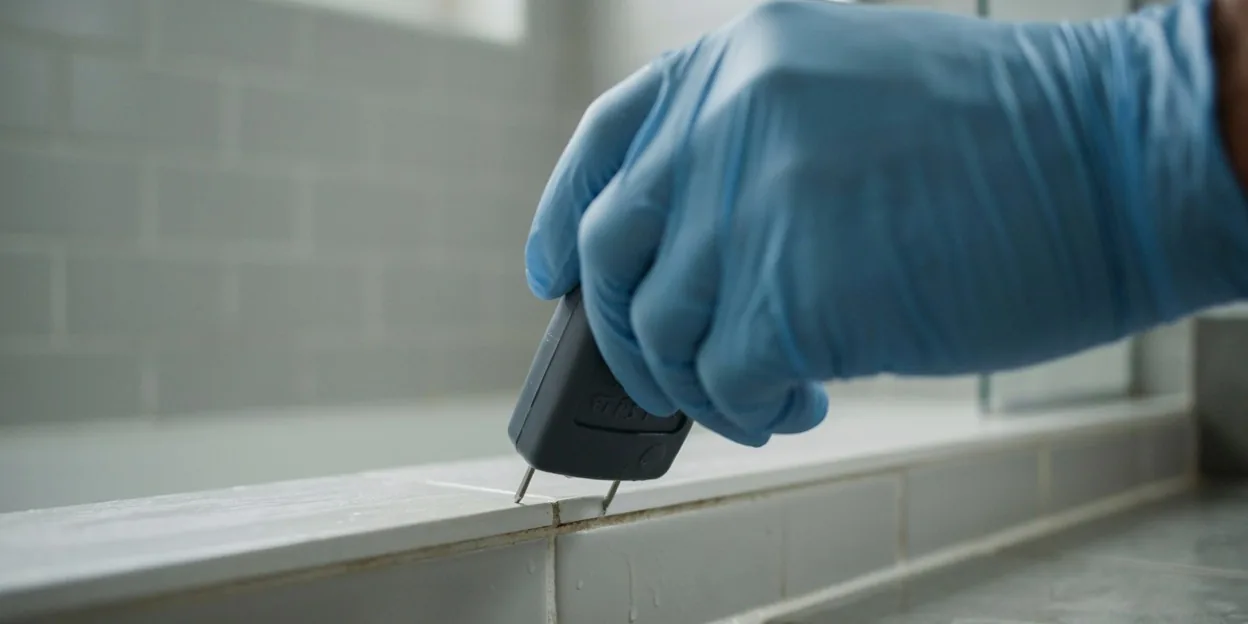
The crew starts with the meter at the street. If the dial moves with every fixture off, water is leaving the system somewhere between the meter and the taps. Then they walk the house with a moisture meter, reading the floor, the base of the walls, and the ceilings, and mark where the numbers rise. A thermal camera shows the cool trail a leak leaves inside a wall or under a floor. In a house on a crawl space they go under the hatch with a light, because a supply line leak under the floor shows first on the dirt and the joists. The goal is one small opening in the right place instead of three walls opened on a guess.
What you can do before the crew arrives
Turn off every fixture and appliance that uses water and watch the meter for a few minutes; if it moves, tell the crew. Check under each sink and behind the toilet with a flashlight. Look at the ceiling below any upstairs bathroom. If you can see into the crawl space, look for wet dirt or a drip line. Do not cut into the wall yourself. Photograph the stain, the soft spot, or the swollen trim, and write down when you first noticed it. If the meter is spinning fast, close the main and call.
What happens once the leak is found
The plumber fixes the pipe; the cleanup crew dries what it wet. If the leak has been running for a while, the plaster or drywall around it is opened at the base so the cavity can dry, wet insulation comes out, and structural drying runs against daily readings. A leak that dripped into the crawl space for weeks has usually soaked the joists and the insulation below the floor, and that becomes a crawl space water extraction as part of the same job. A galvanized line that finally split becomes a burst pipe cleanup. Once everything is dry, the rebuild closes the openings.
Where leaks hide in Olympia houses
The craftsman and bungalow houses built between 1900 and 1940 in South Capitol, Bigelow, the Eastside, and Wildwood still run water through original galvanized steel lines in many cases. Galvanized pipe rusts from the inside and pinholes long before it splits, and a pinhole behind a tub or under the kitchen floor can run for months. The first sign is usually a musty crawl space, a cupped fir floor, or a bill that crept up. Drain lines from that era are cast iron and can crack at the hub where nobody sees them.
The 1960s and 1980s ramblers on the west side have copper supply lines, and the trouble there is usually a pinhole in a line run through the slab or the crawl space, or the drain under a kitchen sink that was leaking into the cabinet base. Houses on private wells out toward Steamboat Island and Yelm add a well pump that cycles all night when a line is leaking, which is often how the owner finds out.
Wet weather muddies the picture. From October to March the crawl space in an Olympia house may be damp from the ground alone, and the crew has to separate ground moisture from a supply leak. A meter that spins with the water off settles it.
Whether a hidden leak is covered depends on your policy and on how long it ran; a sudden break is often covered and a slow leak often is not. This site cannot read your policy. Have the crew document what they found, when, and where.
Calling about a leak that is hiding in an Olympia wall
Say what you noticed and when: the stain, the soft floor, the smell, or the bill. Mention whether the meter moves with everything off and whether the house has galvanized pipe or a well. Keep the address and a callback number close by, then call (360) 364-8868.