Water Damage Restoration in Goldcrest, WA
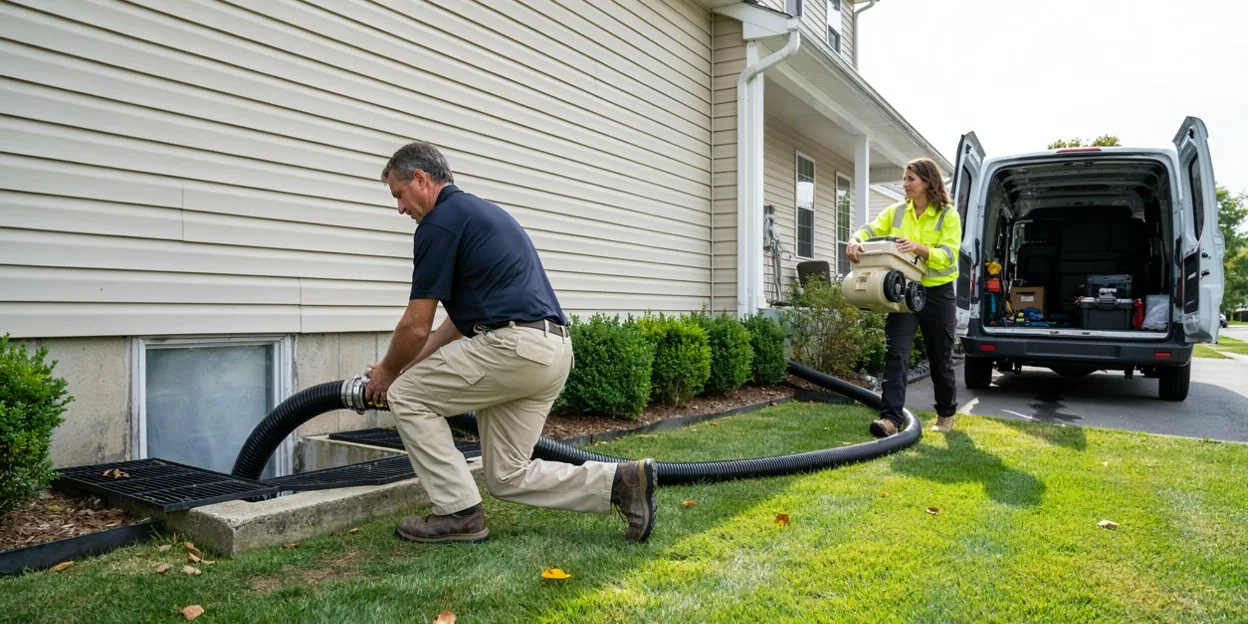
Goldcrest is the neighborhood on Olympia's far west side, north of Black Lake Boulevard and the Capital Mall around Yauger Park, between Cooper Point Road and the city limit at Kaiser Road. It is the newest of the Westside neighborhoods: 1970s ramblers on the blocks nearest the mall, then 1980s and 1990s two-story houses on cul-de-sacs off Goldcrest Drive and Capital Mall Drive, and townhouses and small apartment complexes near the medical offices along Cooper Point Road. The firs are younger here, the lots are smaller, and the garages are bigger.
Yauger Park is the neighborhood's clue to its water. The park's ballfields are also the city's stormwater detention basin for the whole west side, and in a November atmospheric river they fill up and become a lake by design. The ground around them is glacial till that drains slowly, and the houses on the low side of Goldcrest sit a few feet above that basin. The 1980s and 1990s houses have shallow crawl spaces with better drainage than the older ramblers, so most Goldcrest water losses come from inside: a water heater in the garage against a bedroom wall, a washing machine hose on the second floor, a hose bib that froze in the arctic weeks of December 2021 and December 2022.
This site connects Goldcrest homeowners with an independent local water damage provider by phone. The provider meters before anyone cuts.
Goldcrest water damage in a 1980s two-story
A garage tank that let go against a bedroom is a water heater leak cleanup, and the carpet on the other side of the wall is part of it. A second-floor hose failure that came through the kitchen ceiling starts with water extraction on both floors and a ceiling opened at the low spot. A crawl space on the low side of the neighborhood that took water when the basin filled is a crawl space water extraction.
Living next to the detention basin
The ballfields at Yauger Park flood on purpose, which is the city's way of keeping the same water out of the crawl spaces around them, and the storm drains on the streets nearest the park are the ones the city clears first before a big storm. Rebuild permits for drywall, plumbing, and wiring go through the city's Permit Center; the pumping and drying need none. When the crew opens a 1980s wall here they find modern copper and drywall, which dries faster than the plaster across town.
Call (360) 364-8868 and say which floor is wet and whether a tank, a hose, or the basin is the cause. We put you through to an independent local water damage provider serving Goldcrest.
Services Available in Goldcrest
Water Extraction
Standing water pulled off fir floors, tile, and concrete on any level of an Olympia house, then the first moisture readings on the walls it reached.
Structural Drying
Air movers and dehumidifiers run against daily readings until joists, subfloor, and plaster reach a dry target in a damp Puget Sound winter.
Crawl Space Water Extraction
Water pumped out from under a craftsman or rambler after a wet-season storm, then the joists, insulation, and vapor barrier checked and dried.
Burst Pipe Water Damage
Cleanup after an old galvanized line or a frozen hose bib split, with the wall, floor, and crawl space below it metered and dried.
Storm and River Flood Cleanup
Mud, debris, and outside water removed after the Deschutes, the Chehalis, or a king tide came into the house, with soaked materials cut out and the rest dried.
Leak Detection
The source of a stain, a damp floor, or a high water bill traced with meters and thermal imaging before anyone cuts into plaster or lath.
Water Heater Leak Cleanup
A tank that let go in a garage, a utility closet, or a crawl space, with the floor and the walls around it dried before the new tank goes in.
Roof Leak Water Damage
Wet attic insulation, ceilings, and walls dried after a windstorm lifted shingles or moss-clogged gutters sent water behind the fascia.